

Paseo is like a mirage. One wrong turn, and you could miss it entirely. Catch it on a dark night, and you might fail to spot the enduring, endearing details of the district’s Spanish Revival architecture. But in a city bisected by I.M. Pei’s harsh lines, Paseo stands apart with its color, culture and timeless architecture. Developed by G.A. Nichols in 1929 as the first shopping district north of downtown, the area enjoyed nearly four decades as a busy retail and restaurant district before becoming the epicenter of hippie counterculture during a period of decline. In the 1970s, Paseo was revitalized by the artists and galleries that began to move in, laying the groundwork for the neighborhood we know and love today.
Paseo is now somehow the perfect blend of all her different personas: once again home to a bustling restaurant scene as well as a compelling selection of local retail, all layered within the network of galleries and studios that kept Paseo alive long enough to become what she is now. Most importantly, Paseo has managed to remain a stomping ground for the hippies, artists, flunkies, skaters, thinkers, wanderers, poets, lovers and dreamers.
The hearth of Paseo is Picasso Cafe. As is so often the case, this restaurant has served as the third place for this community and a safe haven for the folks who call it home. Picasso turns sixteen this December, and you can trace the bar and restaurant’s success along one throughline: authenticity.
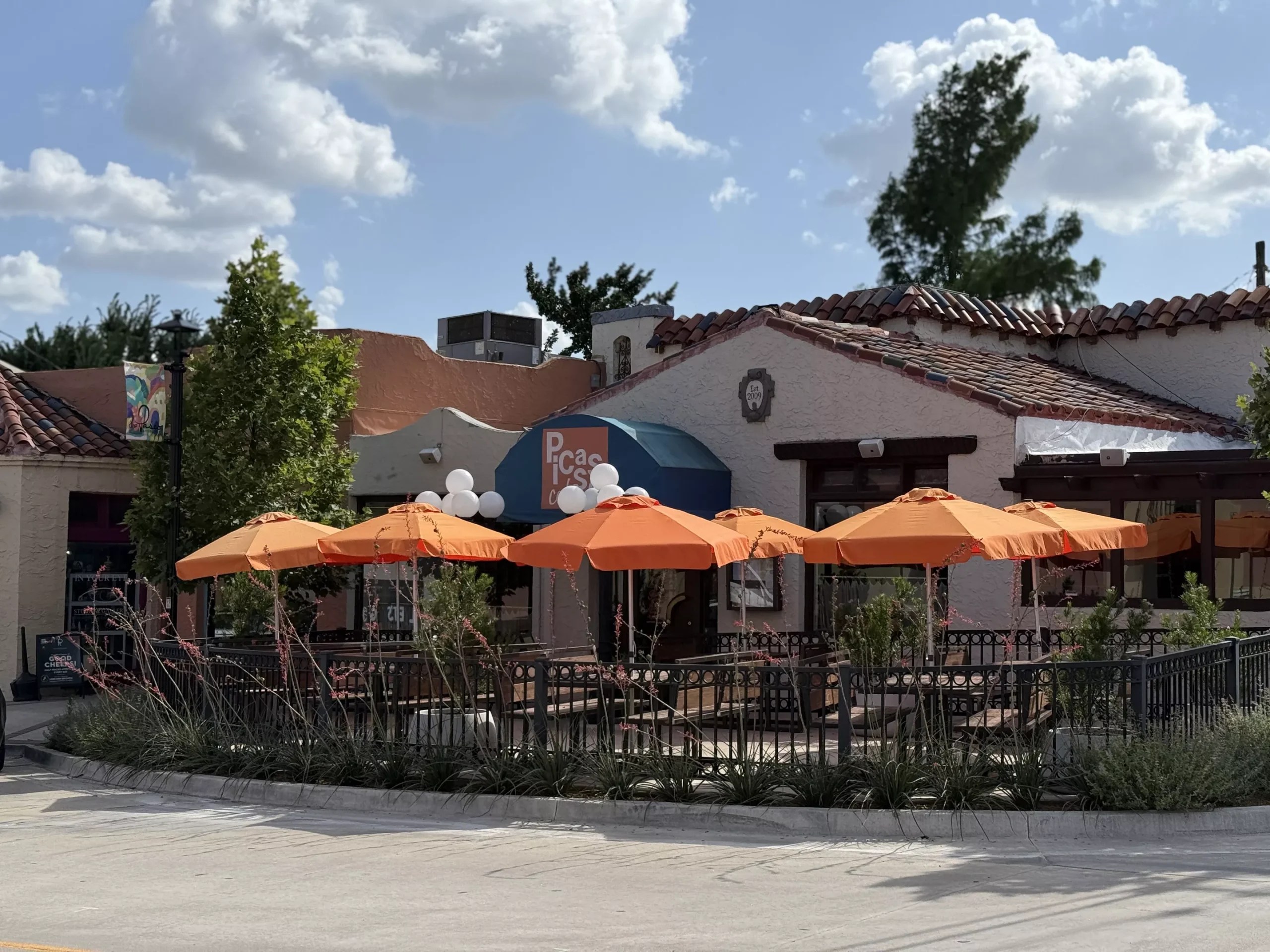
As the city has grown by leaps and bounds, so too has the Paseo. Modern construction has gone up all over Paseo, and many new shops, restaurants, bars and other small businesses have taken root in the area. Just as portions of Oklahoma City are unrecognizable, the same can be said of segments of Paseo. Meanwhile, Picasso has remained largely unchanged inside and out, in both look and feel. Rather, it has evolved in other ways, rising up to meet the changing tides and vibes of the neighborhood and its customers. This is thanks in large part to partner and operator Kim Dansereau. She has been a part of the story since Picasso began in 2009, alongside business partner Shaun Fiaccone, who would eventually go on to form Humankind Hospitality, the group behind Frida Southwest, Oso on Paseo, Flamingo Tiki Room, Sauced on Paseo, and The Other Room, which adjoins Picasso.
As with so many of the folks now running the city’s restaurant scene, Dansereau and Fiaccone can both trace their roots back to Deep Fork Grill. Whatever was in the water in that tributary has become a key element in the landscape of Oklahoma City’s current hospitality business. They were both ready for their next chapter after stints at Deep Fork, North Fork Grill, Cafe Nova and Bolero Tapas Bar & Spanish Grill. When the restaurant previously located at 3009 Paseo received that dreaded orange sticker — and the revocation of that sales tax license — Dansereau and Fiaccone made their move.
Dansereau’s unique ability to identify a need in the community and then come up with a successful plan to fill that need is baked into Picasso’s DNA. In doing so, it often turns out that the void was wider than anyone had previously realized.
One of the earliest and most enduring examples of this is Picasso’s storied vegetarian program.
“For so long, vegetarian food just wasn’t much of a thing in Oklahoma City,” Dansereau explained. “My best friend was a vegetarian, and she always just had to order a bunch of sides, rather than an entree. But (Chef) Ryan Parrot was at North Fork, and he made a chicken-fried portobello for her. It was an actual entrée. The texture was amazing. That got me thinking about vegetarian entrees, kind of keeping track of the best ones around town. I knew there was a need for that. So we always had something on the menu.
“A few years after we opened Picasso, the president of the Oklahoma Vegetarian Society called me and suggested a vegetarian dinner, almost like a wine dinner. We started doing a vegetarian five-course tasting menu monthly, and it sold out almost every month. That’s been going monthly for thirteen or fourteen years, and it usually sells out.”
Parrot joined the team in 2013 and continued refining and adding vegetarian items to the menu and creating veggie specials.
Inclusive neighbors
Another group known to call Picasso home is the city’s LGBTQ+ community. Picasso was ahead of its time — at least in Oklahoma — in terms of inclusive policies, respectful language and pronouns, gender-neutral facilities and diversity in hiring. Beyond that, the group has worked to provide a supportive environment for both staff and guests.
Dansereau talked about another recent evolution, another result of authenticity-driven decisions: the addition of a zero-proof beverage program.
“It was an easy transition for us,” she said. “We were already making a wide array of cocktails with shrubs, which work so well in zero-proof. It was also just the right thing to do for our customers. Everyone should have the option to have a well-made drink that pairs well with food. You shouldn’t be relegated to water because you don’t drink.”

The lively patio is always a fun place to perch, but it’s made even better because Picasso has long allowed customers to bring Fido along for the fun. Beyond being invited, the dogs are also catered to, just like any welcome guest. A full Doggy Dining Menu is available, and complimentary water and treats are always provided.
The menu for humans is wide-ranging and offers something for every palate. The shared plates are especially strong. Standouts include the fried goat cheese, smoked salmon and avocado spring rolls and the Impossible empanadas. Brunch is wildly popular — the breakfast burrito is as big as your arm and the stuff of legend. This menu is largely, perhaps completely, the work of Ryan Parrot, the concept’s longtime executive chef.
Change is, as always, afoot. In June, Parrot announced his departure after 12 career-defining years. A Facebook post on his personal page was nothing but positive. He cited a need for some time off with family and hinted at new culinary projects coming together. Dansereau had nothing but praise for her colleague and friend.
“He was just absolutely instrumental in making us what we are, for over a decade. We will always be thankful he shared his talents with us,” she said.
And while Parrot was definitely a driving force, he never made it about himself; the restaurant should fare well in the face of his departure as a result of keeping the institution center stage.
It’s almost impossible to imagine Paseo without Picasso and the de facto community-building role the restaurant has taken on. Neighbors agree.
“Picasso has become an anchor of the Paseo Arts District,” said Amanda Bleakley, executive director of the Paseo Arts Association. “From their locally focused cuisine to support of community artists and their love for our furry friends, they are an excellent partner in the success of the district.”
Partner, placemaker, progressive neighbor — Picasso Cafe is nothing short of a masterpiece. Visit picassosonpaseo.com.
This article appears in City crowned.